

Rattan Rings
Zhu Huan (竹環) - Rattan Ring
Zhu (竹) means “Bamboo” or “Rattan.”
Huan (環) means “Ring” or “Circle.”
The rattan ring, or Zhu Huan (竹環), (Fig. 1) is one of the most underestimated yet essential pieces of training equipment in traditional Chinese martial arts. Zhu (竹) refers to bamboo or rattan, and Huan (環) to a ring or circle, simple words that describe a tool capable of transforming your understanding of close-range structure, power, and precision. This is also pronounced "Jook Wan" in the Cantonese dialect.
If you train Wing Chun (咏春拳), Hakka Fist (客家拳), Boat Boxing (船拳), or any southern system that relies on bridging, you will quickly discover that the rattan ring is not just a historical curiosity it is a brutally honest teacher that exposes every weakness and refines every strength. Many practitioners only realise how incomplete their training has been once they finally pick up a ring and feel what their arms should have been doing all along.
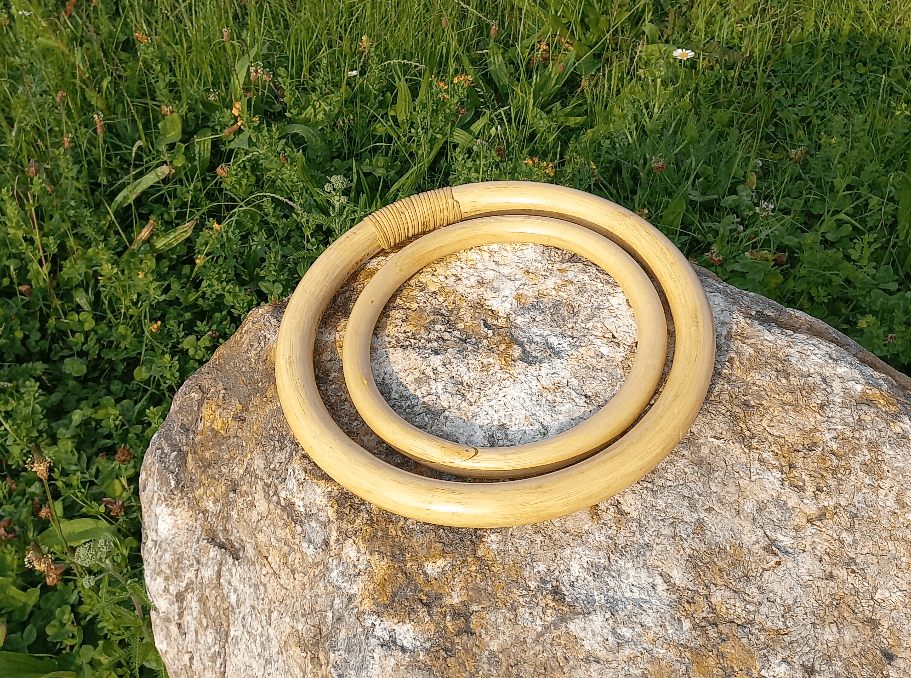
Fig. 1 - The authors most used, and most travelled, rings. These two rings have endured years of use and are still as good as the day they were bought
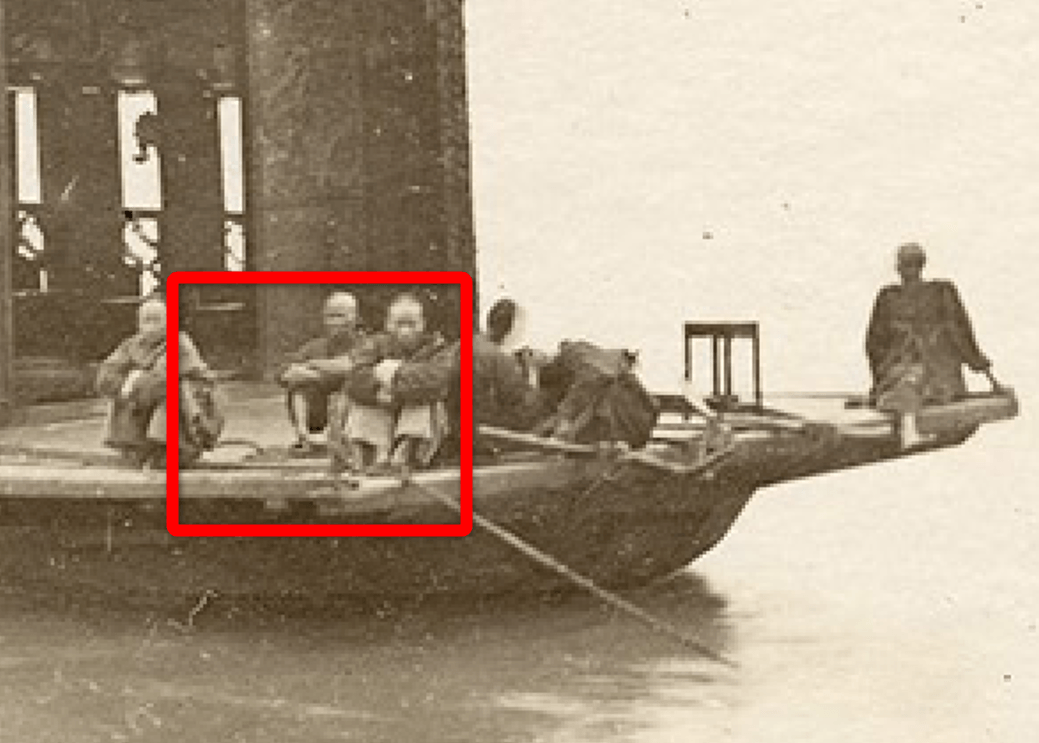
Fig. 2- In this cropped section from Flower Boat, Guangzhou, you can clearly make out the circular ring being held by the second man from the left. (Lai Fong (ca.1839 –1890), Flower Boat, Guangzhou, ca.1870s. Cropped detail. Public domain).
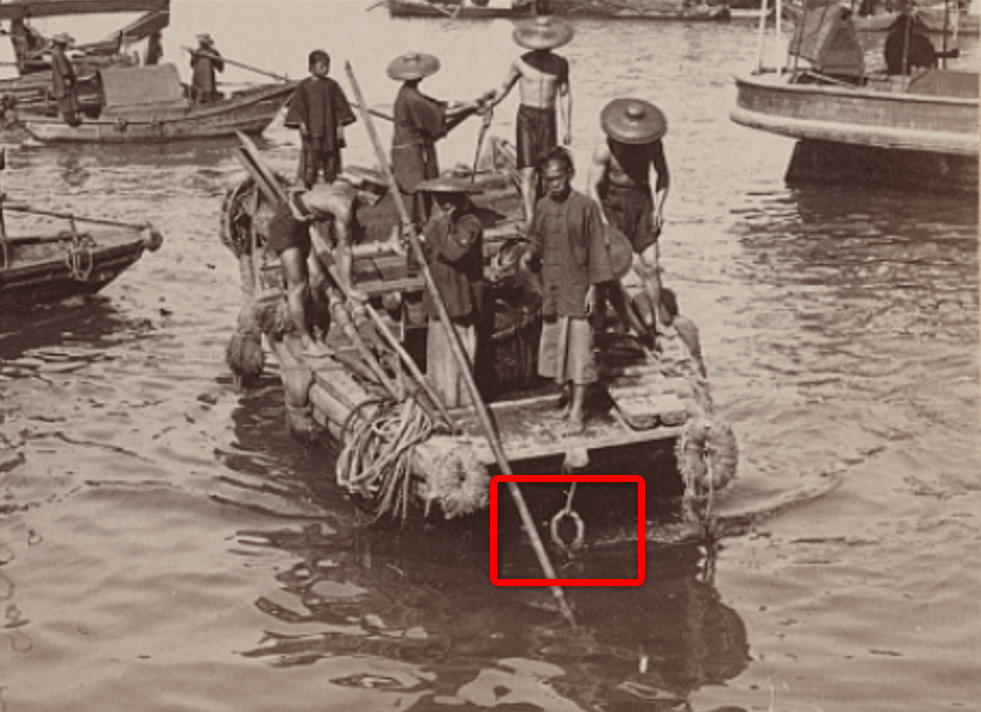
Fig. 3 - Mooring ring on the bow of a Chinese fishing boat. Arrival of a Chinese fishing boat, Hong Kong, China (LC-DIG-ppmsca-08736). Adapted from an image courtesy of the Library of Congress, Prints and Photographs Division.
Where did the use of rattan rings come from? Well, a fascinating detail recorded in Six Records of a Floating Life written by a Chinese civil servant who visited a number of floating "Flower Boats" in 1793 contains the passage:
“Between each two boats was a wooden stake with a rattan ring around it, and the boats were tied to the ring so that they could float up and down with the tide.” - Shen Fu, Six Records of a Floating Life, trans. Leonard Pratt and Chiang Su-hui, 1936. Public domain.
These rings, such as the ones seen in Fig. 2 & 3, were durable, plentiful, innocuous and were ideal items for martial artists needing portable tools aboard cramped ships. It is almost certainly from this environment that the training ring evolved and spread through close-range southern martial systems.
The prevalence of rattan rings in Boat Boxing and related arts makes perfect historical sense: they were practical, available everywhere, and perfectly suited to developing the tight, efficient mechanics demanded in confined environments. Today, the same qualities remain, making the ring as valuable now as it was then.
Function and Application
For the Chinese boxing practitioner, the rattan ring provides immediate feedback on the structure of the arms, the alignment of the elbows, and the fluidity of the upper torso. Because the ring confines your movement just enough to reveal inefficiencies, it forces you to correct them rather than gloss over them. Even simple drills suddenly become technical and revealing.
Training traditionally begins from a seated position on a small bench or chest. This stabilises the lower body so that every adjustment must come through the spine, shoulders, and arms. It teaches the practitioner to maintain contact through the forearms rather than relying on hand manipulation, one of the most important transferable skills for bridge-arm engagement during close-range combat.
As the practitioner advances, the ring becomes a tool for power development as well. Quan Wan Jing (圈彎精), or Refined Circular Force, is trained both seated and standing to develop explosive power within limited space. Because the ring restricts unnecessary movement, it forces the practitioner to rely on connected body mechanics rather than muscular effort. This translates directly to the kind of short-range force needed in real application.
The rattan ring is lightweight, portable, inexpensive, and deceptively effective. Anyone serious about close-range martial arts will quickly feel the difference in structure, precision, and power when they incorporate ring work into their routine. Training without one is like trying to learn bridge contact without ever touching a bridge.
Sizing and Selection
The traditional sizing rule is straightforward: the diameter of the ring should match the length of your forearm from wrist to elbow (Fig. 4). This ensures the ring mirrors the “bridge arm” (Qiao Shou 橋手) in both distance and pressure.
For most practitioners:
6 - 8 inch rings are ideal for skill training, structure, sensitivity, and precision.
10 - 12 inch rings , or a heavier iron ring, provide excellent power development and conditioning.
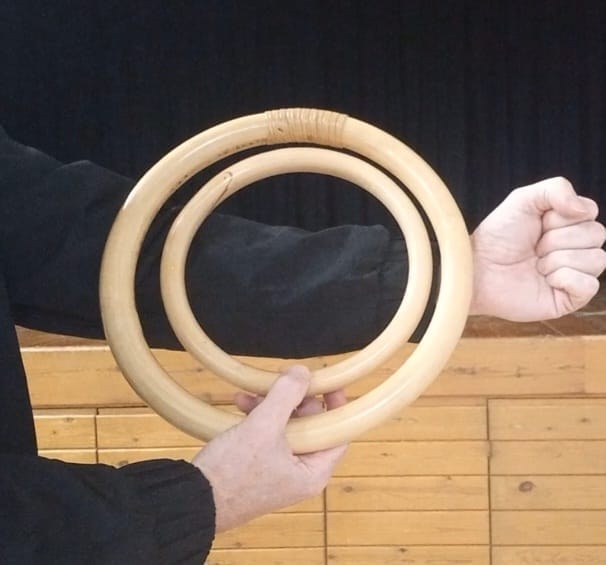
Fig. 4 - The standard for ring sizing is the length of the forearm from wrist to elbow. Something to be aware of is that some styles also make use of much larger rings.
Owning at least two rings is strongly recommended, one smaller for skills and one larger or heavier for power. This mirrors traditional training and prevents your progression from becoming lopsided or limited.
Method Framework
My own training approach divides ring practice into two primary method sets:
24 methods from Chuan Quan (Boat Boxing)
24 methods from Zhongguo Quan (Chinese Boxing)
Together, these methods refine coordination, structural pressure, rhythm, and functional mechanics. They also expose practitioners to a variety of regional interpretations, strategies, and applications.
At intermediate and advanced levels, the ring further supports the development of Lung San Gong (龍身功), or Dragon Body Skill, the transformation of raw force into refined, whole-body power that can be expressed over extremely short distances. This is where practitioners typically begin to feel profound changes in their movement and capability.
Next Steps
For those wishing to incorporate rattan ring training into their practice, a dedicated YouTube video series will soon be available (Fig. 5), along with the first volume of a three-part companion training guide. These resources break down eleven core methods and a number of specialised drills for martial power (Wu Li 武力), giving you a clear and structured entry point.

Fig. 5 - Our Youtube Banner
Rattan rings from trusted suppliers are available from most good supply stores and it is recommended to purchase a minimum of two, one smaller ring for skill refinement and one larger or heavier ring for power training. Having both ensures the full range of methods can be developed safely and effectively.
An recent, and interesting, development in the larger ring market has been the introduction of the "Emperor Ring" from rattanring.com (who have a wealth of interesting training information and products and are well worth checking out). Their rings are also found on the ebay marketplace.
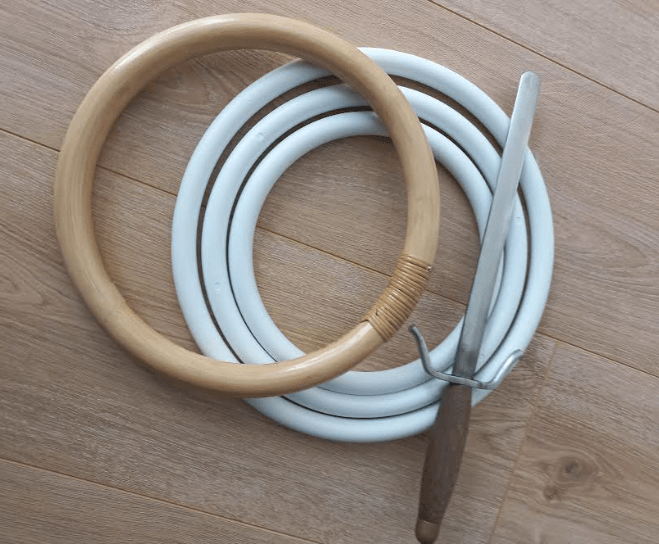
Fig. 6 - Three sizes of rings are also available as a single purchase from the suppliers everythingwingchun.com and may prove a good investment if rattan rings are not to your liking, they also have a wealth of training information and products to choose from.. A selection of their rings are seen above along with the authors single Iron Ruler and 10" rattan ring.
Disclaimer
The information presented on this page is provided for educational and informational purposes only. The author and publisher are not responsible or liable for any injury or harm sustained as a result of using the equipment or performing the exercises described. Physical training carries inherent risks. Individuals should consult with a qualified physician or healthcare professional before beginning any fitness program or using new equipment, especially if they have any pre-existing conditions or concerns. Participation is voluntary and at your own risk.
Note on Public Domain Materials
Images and texts published over 100 years ago, including the photograph Flower Boat, Guangzhou by Lai Fong and excerpts from Six Records of a Floating Life by Shen Fu, are believed to be in the public domain. These works are reproduced here respectfully and are freely available for use in educational, creative, and scholarly contexts.
Affiliate Disclosure
There are no affiliate links on this page. Product listings are for informational purposes only and do not represent endorsements. Please select equipment based on your personal training goals, needs, and conditions.